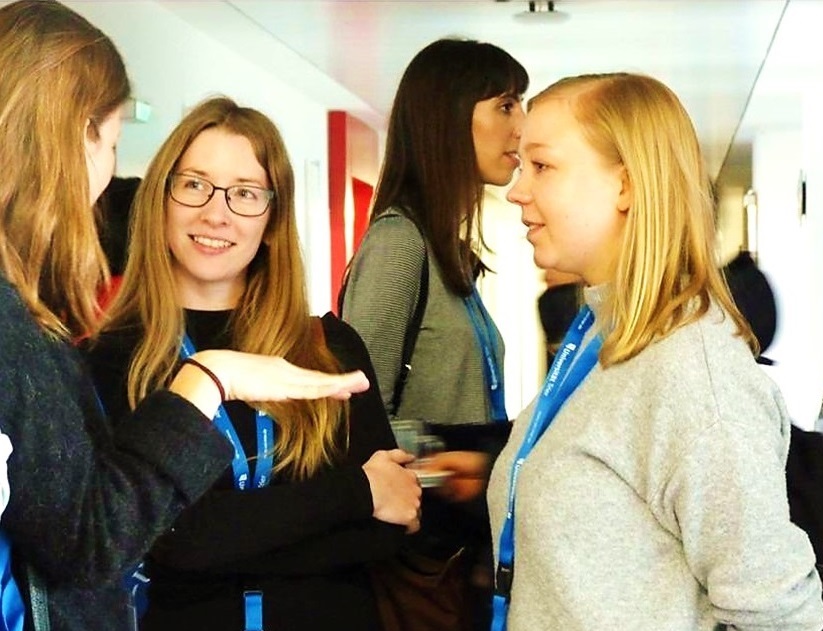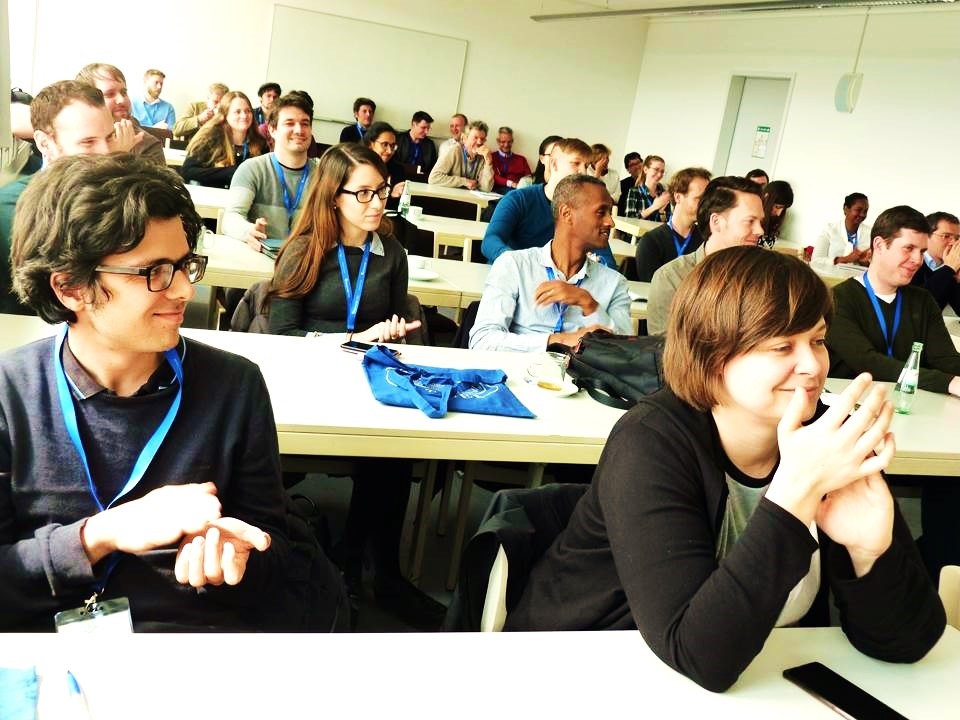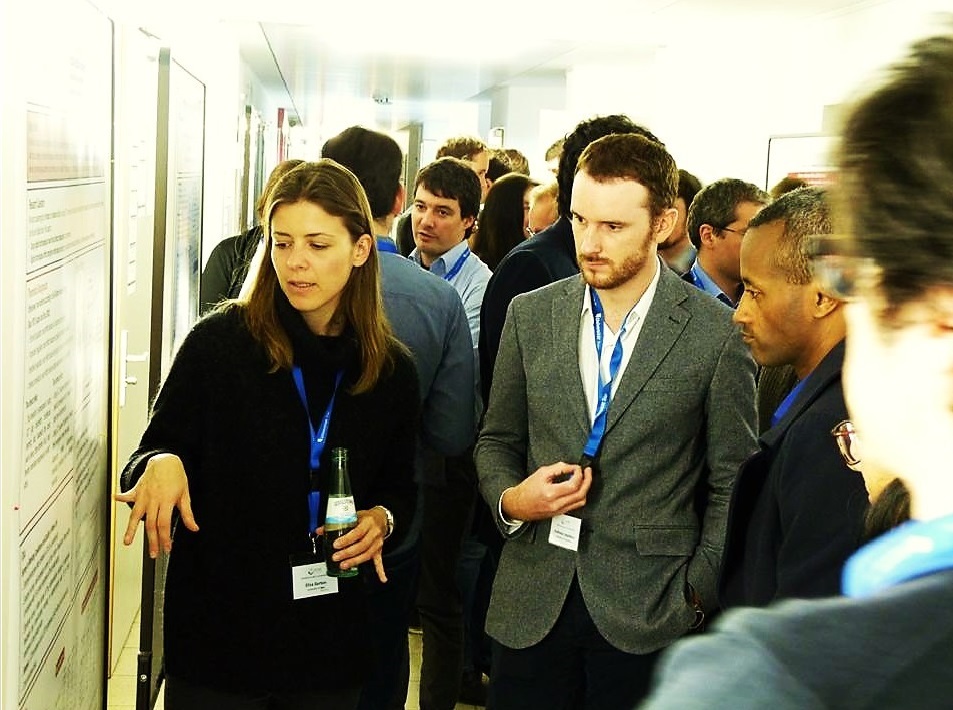
Fifty guests in total, many interesting presentations as well as scientific exchange at the highest level- this is the final result of the Workshop on Labour Economics, which has taken place on April 12 and 13, 2019 at Trier University.
For the eleventh time has the IAAEU’s economics team offered this conference - which has already established itself in the field of personnel and labour economics in the European sphere. The event was promoted and financially supported by the center of graduates ("Graduiertenzentrum") of Trier University.
In total, 34 researchers- of which 19 were junior scientists- were able to present their latest findings. The topics of this year’s conference ranged from standard topics of personnel economics and labor economics to further related areas. For instance, one presentation covered the impact of job insecurity on health, while another one focused on a possible connection between the extent of regional immigration on life satisfaction of the local population.
Putting its focus on junior scientists, the conference offered a great chance of professional exchange for PhD students. Each of the juniors was assigned to a senior - an experienced researcher who was to evaluate the work process and the final presentation. Subsequently to the presentations, a short discussion by the respective senior enabled the young scientist to attain new perspectives of their field of research. This way ambiguities and methodological issues were discussed and the junior’s work could be qualitatively improved. In addition, the event aimed at forming cooperative relationships between scientists; especially among juniors and seniors.
The award for the best contribution ("Best Paper Award") was handed out twice this year: once for a theoretical essay, which analyzed how financial compensations of high- and low-skilled workers are affected by technological change and intensified use of capital in the production process, both in a short- and long-term perspective. The author of this essay, Michael Knoblach, from the Technical University of Dresden, was visibly happy about receiving the award: “I did not expect this at all. I am certainly honoured for receiving such an award for my work!” Nicolas Apfel, from the University of Regensburg, was similarly enthusiastic about receiving an award for his contribution, which focused on improving estimation results subject to uncertain causality issues: “I am very happy about receiving this award and I hope that the findings of my research will help other fellow researchers”. Mr. Apfel was given the award not least for his programmed statistical application, with which his research strategy can be transferred easily onto similar methodological problems in other contexts as well.
Yet again, the attractiveness of this event has been emphasized by the high number of attendees this year. In total, there have been 90 applications - more than three per available presentation slot. We can look back at a successful Workshop on Labor Economics and thank all participants for their involvement and for the success of this event!
Impressions of the WLE 2019